
Hi, I’m Kushal from India.

When I first started learning about investing, I believed that investing was only for experts who understood stock markets, company reports, and complicated financial terms. Whenever I heard words like shares, portfolios, and market risk, I felt investing was too difficult for beginners like me.
Then I came across mutual funds.
What surprised me the most was that mutual funds allowed ordinary people to start investing without becoming stock market experts. That was the moment I realized why mutual funds have become one of the most popular investment options around the world.
If you’re hearing about mutual funds for the first time, don’t worry. In this guide, I’ll explain everything in simple language so even complete beginners can understand it.
What Is a Mutual Fund ?

A Mutual Fund is an investment where money from many investors is collected and managed by professional fund managers. The collected money is then invested in different assets such as stocks, bonds, or other securities.
In simple words, a mutual fund is like a big basket of investments where many people contribute money, and experts manage it on their behalf.
Instead of buying shares of 20 or 30 different companies yourself, a mutual fund can give you exposure to many investments through a single investment.
A Simple Real-Life Example
Imagine five friends want to invest in different businesses, but none of them has enough money or knowledge to invest separately.
So they decide to combine their money and ask an experienced investor to manage it for them.
The expert then invests the money in different companies instead of putting everything into one place.
This is very similar to how a mutual fund works.
Many investors contribute money, and professional fund managers make investment decisions on behalf of everyone.
When I first understood this example, mutual funds suddenly became much easier to understand.
Why Do People Invest in Mutual Funds ?
There are many reasons why mutual funds are popular among beginners.
Some people invest to:
- Build long-term wealth
- Save for retirement
- Plan for children’s education
- Buy a house in the future
- Beat inflation
- Achieve financial goals
For many investors, mutual funds act as a bridge between simple savings and more advanced investing.
How Does a Mutual Fund Work ?

The process is simpler than many beginners think.
Step 1: Investors Contribute Money
Thousands of investors invest money into the fund.
Step 2: The Fund Creates a Large Pool of Money
All the money is combined together.
Step 3: Professional Fund Managers Invest It
The fund manager decides where to invest the money.
Step 4: Investments Grow or Decline
The value of the investments changes based on market performance.
Step 5: Investors Share the Results
If the investments perform well, investors may benefit. If markets fall, the value of investments may also decrease.
What I Learned About Mutual Funds
One of the biggest lessons I learned was that investing doesn’t require huge amounts of money.
Before learning about mutual funds, I thought investing meant having lakhs of rupees available.
However, I later realized that many people start with small monthly investments and continue investing consistently for years.
This taught me that consistency often matters more than trying to invest a large amount all at once.
Types of Mutual Funds
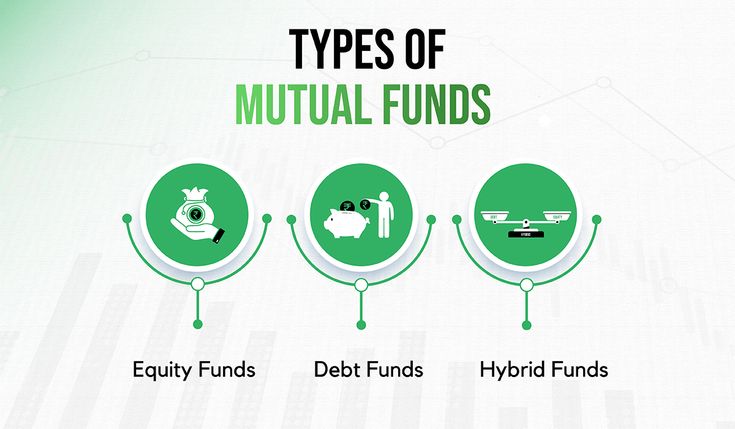
There are many types of mutual funds, but beginners only need to understand the basics.
Equity Mutual Funds
These mainly invest in company shares.
They generally offer higher growth potential but may also involve higher risk.
Debt Mutual Funds
These invest in fixed-income securities such as bonds.
They are generally considered less volatile than equity funds.
Hybrid Mutual Funds
These combine both equity and debt investments.
Many beginners prefer them because they offer a balance between growth and stability.
Index Funds
These funds aim to track a market index instead of trying to beat it.
They have become increasingly popular among long-term investors.
What Is SIP?

While learning about mutual funds, I kept hearing the word SIP.
SIP stands for Systematic Investment Plan.
It allows investors to invest a fixed amount regularly, such as every month.
For example:
- $50 per month
- $100 per month
- $500 per month
This approach helps people build investing habits gradually.
Benefits of Mutual Funds
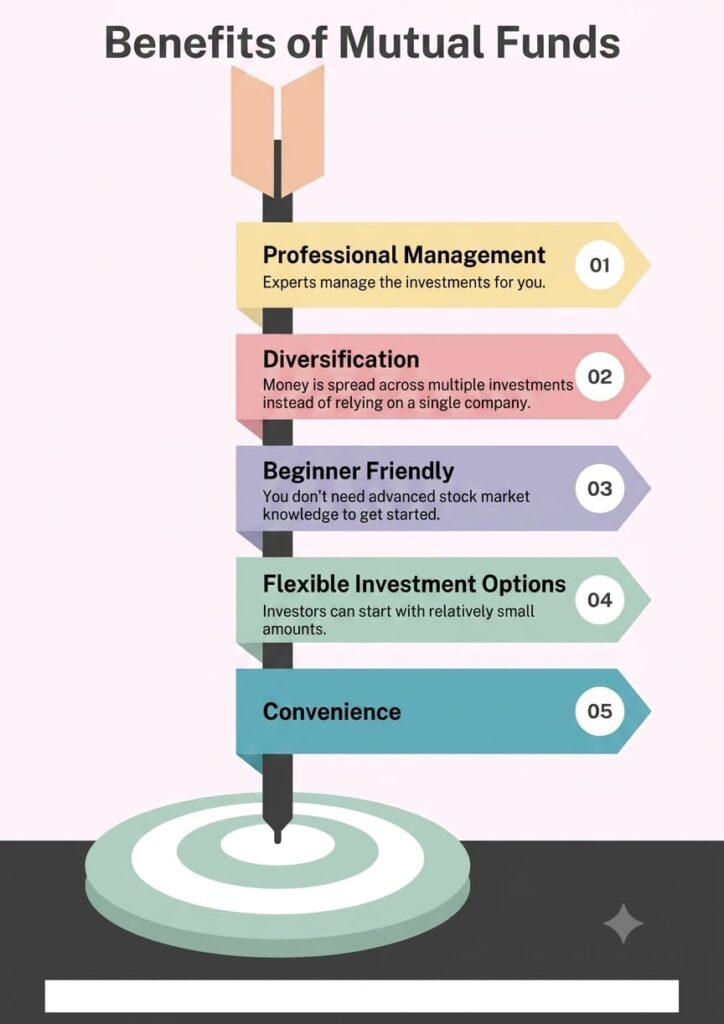
1- Professional Management
Experts manage the investments for you.
2- Diversification
Money is spread across multiple investments instead of relying on a single company.
3- Beginner Friendly
You don’t need advanced stock market knowledge to get started.
4- Flexible Investment Options
Investors can start with relatively small amounts.
5- Convenience
Most investments can now be managed online through mobile apps.
Risks of Mutual Funds
Mutual funds are investments, not guaranteed savings products.
This means there are risks involved.
Market Risk
If markets fall, investments may lose value.
Short-Term Volatility
Prices can move up and down in the short term.
No Guaranteed Returns
Unlike a Fixed Deposit, mutual fund returns are not fixed.
Understanding these risks is important before investing.
Common Mistakes Beginners Make
In my opinion, one of the biggest mistakes beginners make is expecting quick profits.
Some common mistakes include:
- Investing without understanding the product
- Panicking during market declines
- Chasing recent high-performing funds
- Investing money needed for emergencies
- Expecting guaranteed returns
Investing usually works best when approached with patience and discipline.
Are Mutual Funds Better Than Fixed Deposits?
This is one of the most common questions beginners ask.
The answer depends on your goals.
A Fixed Deposit focuses more on stability and predictable returns.
A Mutual Fund focuses more on long-term growth potential but involves market risk.
Neither option is automatically better than the other.
Many people use both as part of their financial planning.
Who Should Consider Mutual Funds?
Mutual funds may be suitable for people who:
- Want long-term growth
- Are comfortable with some market risk
- Want professional management
- Prefer investing gradually through SIPs
- Want diversification
My Personal View on Mutual Funds
When I first learned about mutual funds, I realized that investing isn’t about becoming rich overnight.
It’s about giving your money the opportunity to grow over time while staying patient and disciplined.
That change in mindset completely changed how I viewed investing.

Conclusion
Mutual funds have made investing more accessible for millions of people around the world. They allow beginners to invest in professionally managed portfolios without needing deep knowledge of the stock market
While mutual funds involve risk and there are no guaranteed returns, they can play an important role in long-term financial planning when used responsibly.
For beginners in 2026, the most important thing is not finding the “perfect” mutual fund. It is understanding how investing works and developing the habit of investing consistently over time.
Small investments made regularly today can become powerful financial assets in the future.