
Hey!
I am Kushal from India.
When I first started learning about personal finance, I thought saving money was only for buying things like a smartphone, a bike, or going on a trip. However, I soon realized that one of the most important reasons to save money is to prepare for unexpected situations.
Life is unpredictable. Medical emergencies, job loss, car repairs, or sudden family expenses can happen at any time. That’s where an emergency fund becomes extremely important.
In this beginner-friendly guide, I will explain what an emergency fund is why it matters and how you can start building one.
What Is an Emergency Fund ?
An Emergency Fund is a savings set aside specifically for unforeseen financial scenarios.
This is not for shopping, holidays or entertainment, this is a crash fund you can turn to in emergencies rather than depend on your credit cards or financially borrowing.
In simple words, an emergency fund is money you save today to protect yourself from problems that may happen tomorrow.
Why Is an Emergency Fund Important ?

Many people live from paycheck to paycheck. If an unexpected expense appears, they may need to borrow money or take a loan.
An emergency fund helps avoid this situation.
- Cover unexpected medical bills
- Handle emergency home repairs
- Pay for urgent car repairs
- Manage expenses during job loss
- Avoid unnecessary debt
Having emergency savings can reduce stress and give you peace of mind.
What Counts as an Emergency ?

Many beginners get confused about what should be considered an emergency.
A genuine emergency is an unexpected expense that has to be dealt with immediately.
Include Example :-
- Medical Emergencies
- Job Loss
- Urgent Home Repairs
- Vehicle Repairs
- Family Emergencies
1. Medical Emergencies :- Unexpected hospital visits, surgeries, or treatments.
2 Job Loss :- And in the case of losing your job an emergency fund can help you cover everyday expenses until you find a new line of work.
3 Urgent Home Repairs :- For example, a leaking roof or damaged electrical system.
4 Vehicle Repairs :- If your vehicle suddenly breaks down and you need it for work.
5 Family Emergencies :- Unexpected situations that require immediate financial support.
What Is NOT an Emergency ?
This is just as important to understand.
The following are usually not emergencies :
- Buying a new smartphone
- Shopping during a sale
- Going on vacation
- Upgrading gadgets
- Buying luxury items
An emergency fund should never be dipped into for non-essential reasons.
How Much Money Should You Save ?
One of the most common questions beginners ask is:
“How much should my emergency fund be ?”
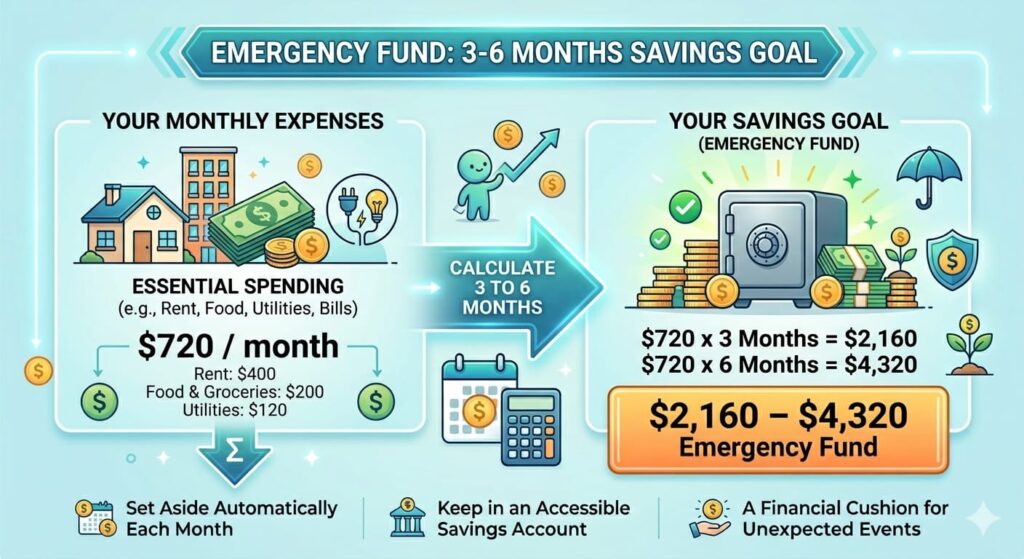
One of the standard suggestions is to have 3-6 months of living expenses set aside for emergencies.
Example :-
If your monthly expenses are $240, your emergency fund goal could be :
- 3 months = $720
- 6 months = $1440
Don’t worry if this sounds like a large amount. Building an emergency fund takes time.
How to Build an Emergency Fund
An emergency fund can be established more easily if you develop a simple plan.
1. Start Small :- You don’t need thousands of rupees immediately.
Even saving $5 or $10 per month is a good start.
2. Set a Goal :- Choose a target amount and work toward it gradually.
3. Save Consistently :- Try to save money every month, even if it’s a small amount.
4. Separate Your Savings :- Have your emergency savings held in an account where they’re not going to tempt you to spend them.
5. Avoid Unnecessary Spending :- Reducing small unnecessary expenses can help you save faster.
What I Learned About Emergency Funds
While learning about personal finance, I realized that many people focus on investing before building an emergency fund.
But if an emergency happens and you don’t have savings, you may be forced to sell investments or take a loan.
This is why most financial experts will tell you to first build a contingency corpus, before getting into large investments.
For beginners, having emergency savings can provide confidence and financial stability.
Benefits of Having an Emergency Fund
An emergency fund offers several advantages.
- Financial Security
- Reduced Stress
- Less Dependence on Loans
- Better Financial Planning
- Peace of Mind
1. Financial Security :- You know you have money available and in reserve when unforeseen difficulties arise.
2. Reduced Stress :- Financial emergencies become easier to manage.
3. Less Dependence on Loans :- You may avoid borrowing money during difficult situations.
4. Better Financial Planning :- With emergency savings, you can keep your eye on the longer-term picture.
5. Peace of Mind :- Knowing that you are prepared for unexpected situations can be very reassuring.
Common Mistakes Beginners Make
In my opinion, one of the biggest mistakes beginners make is waiting for the “perfect time” to start saving.
Some common mistakes include :
- Not saving consistently
- Using emergency funds for shopping
- Keeping no emergency savings at all
- Spending savings on non-essential items
- Setting unrealistic goals
Remember, sometimes a small saving over time can make a large difference:
Where Should You Keep Your Emergency Fund ?
Your emergency fund should be easy to access when needed.
Many people choose :
- Savings accounts
- High-interest savings accounts
- Bank accounts with quick access to funds
Never keep emergency money in locations that could be hard to get to quickly when needed.
Real-Life Example

Suppose that you are a private employee and lose your job. Your monthly expenditure (including house rent, groceries, and electricity bills) is about $250.
If you have an emergency fund that covers 4 to 6 months of expenses, you could keep meeting your bills and go looking for another job. You wouldn’t need to borrow $250 from people or from your credit card.
This simple example shows why an emergency fund is often called a financial safety net.
Conclusion
An emergency fund is a crucial aspect of personal finance. It acts as a safety net for unforeseen costs, helps to ease the burden of financial strain and offers the comfort of knowing you will be okay during tough times.
There’s no need to create an enormous emergency fund overnight. Just save a little each week or month, and keep setting aside money until you reach your goal. Eventually, your emergency fund will act as a helpful parachute whenever unforeseen costs arise.
For beginners, building an emergency fund is often one of the smartest financial decisions you can make.