
Hi, I’m Kushal from India
When I first started learning about investing, I thought I needed a lot of money before I could even begin. I also believed investing was mainly for people who understood complicated charts, followed the stock market every day, or had years of financial experience.
The more I learned, the more I realized that wasn’t true.
You don’t need to be an expert to start investing. What you really need is a basic understanding of where your money is going, why you’re investing, and how much risk you’re comfortable taking.
If you’re a beginner in 2026 and have been thinking, “I want to start investing, but I don’t know where to begin,” you’re not alone.
This guide will walk you through the basics step by step, using simple examples instead of complicated financial terms.
What Does Investing Actually Mean?

Investing means putting your money into something with the expectation that it may grow or generate income over time.
For example, people invest in:
- Stocks
- Mutual funds
- Exchange-traded funds (ETFs)
- Fixed deposits
- Bonds
- Gold
- Other financial assets
The main idea is different from simply keeping money aside.
When you save money, you’re mainly focusing on keeping it available and safe.
When you invest, you’re accepting some level of risk in exchange for the possibility of earning a return.
That’s why investing should be approached with a plan rather than excitement.
Why Should You Start Investing?

One reason people invest is to build wealth over the long term.
Imagine you keep $10 aside every month.
After one year, you’ve simply contributed $120.
If you invest that money and earn returns over many years, your money has the potential to grow beyond your original contributions.
This is where compounding can become powerful.
The important thing is that investing isn’t about becoming rich quickly.
It’s about giving your money time to potentially grow.
Step 1: Get Your Basic Finances in Order
Before investing, look at your current financial situation.
Ask yourself:
- Do I have regular income?
- Do I have an emergency fund?
- Do I have expensive debt?
- How much can I realistically invest every month?
- What are my financial goals?
I personally think this step is often ignored because investing sounds more exciting than budgeting.
But investing while struggling with high-interest debt or without emergency savings can create unnecessary pressure.
Step 2: Build an Emergency Fund
Before putting money into investments, consider keeping some money available for unexpected expenses.
For example, imagine you suddenly need ₹30,000 for an emergency.
If all your money is invested in the market and your investments have fallen, you might be forced to sell at an inconvenient time.
An emergency fund gives you a financial cushion.
The amount you need depends on your income, expenses, job stability, and personal circumstances.
The important point is simple:
Money meant for emergencies should be easily accessible rather than dependent on market performance.
Step 3: Understand Your Investment Goal
Don’t invest simply because everyone else is doing it.
First ask:
“Why am I investing?”
Your goal could be:
- Building long-term wealth
- Retirement
- Buying a home
- Children’s education
- A future business
- Financial independence
Your goal affects how you invest.
For example, money you may need very soon generally shouldn’t be treated the same way as money you’re investing for several decades.
Step 4: Understand Your Time Horizon
Your time horizon is how long you expect to keep your money invested.
Think of it like this:
Short-Term
You may need the money within a few years.
Medium-Term
You have several years before you need it.
Long-Term
You may not need the money for 10, 20, or more years.
Longer time horizons can give investors more opportunity to handle market ups and downs, although they do not eliminate risk.
Step 5: Learn the Basic Investment Options
You don’t need to learn every investment product available.
Start with the basics.
Stocks
Stocks represent ownership in companies.
They can offer significant long-term growth potential but can also experience large price fluctuations.
Mutual Funds
Mutual funds pool money from many investors and invest it according to the fund’s strategy.
They can provide diversification, depending on the type of fund.
ETFs
Exchange-traded funds are investment funds that trade on stock exchanges.
Many ETFs track an index or a particular group of assets.
Fixed Deposits
Fixed deposits can provide relatively predictable returns and are generally considered lower-risk compared with stocks, subject to the applicable bank and deposit-insurance framework.
Gold
Gold is another asset people may use for diversification.
Each investment has different characteristics, risks, and potential returns.
Step 6: Understand Risk Before Investing
This was one of the biggest lessons I learned.
Beginners often ask:
“Which investment gives the highest return?”
A better question is:
“How much risk am I taking to get that potential return?”
Every investment carries some risk.
Stocks can fall.
Mutual funds can lose value.
Even investments considered relatively stable can have their own risks.
Your investment choices should therefore match your ability and willingness to handle losses and fluctuations.
Step 7: Don’t Put Everything in One Investment
This is where diversification becomes important.
Imagine you have $1000 and invest all of it in one company.
If something goes badly for that company, your entire investment can be affected.
Instead, spreading your money across suitable investments can reduce your dependence on one asset or company.
Diversification doesn’t guarantee profits, but it can help reduce concentration risk.
Step 8: Decide How Much You Can Invest
You don’t need $1,000 to become an investor.
Even a small amount can be a starting point if it fits your budget.
For example, someone might decide to invest $10 every month.
Another person might be able to invest $50.
Someone else might invest $200.
The right amount isn’t the amount another person invests.
It’s the amount you can invest consistently without damaging your everyday finances.
Step 9: Learn About SIPs
If you are interested in mutual funds, you may come across the term SIP, or Systematic Investment Plan.
A SIP allows an investor to invest a fixed amount into a mutual fund at regular intervals, often monthly.
For example, suppose you choose a $20 monthly SIP.
Instead of investing $240 at once, you invest $20 each month.
This can make investing feel more manageable and can encourage regular investing.
However, a SIP does not guarantee profits, and mutual fund investments are subject to market risks.
Step 10: Choose the Right Account and Platform

To invest in many market-linked products in India, you may need appropriate accounts such as a demat account and a trading account, depending on what you’re investing in.
A demat account is used to hold securities electronically.
A trading account allows you to place buy and sell orders through a broker.
When choosing a platform, beginners should pay attention to things such as:
- Brokerage and other charges
- Platform reliability
- Security features
- Ease of use
- Customer support
- Regulatory status
Don’t choose a platform simply because a friend uses it.
Understand what you’re signing up for.
Step 11: Start Small
One of the biggest mistakes beginners make is starting too aggressively.
They see someone making money from stocks and decide to invest a huge amount immediately.
I understand the temptation because I’ve felt it too.
But investing is something you can learn gradually.
Starting with an amount you can comfortably afford allows you to understand how markets behave without putting unnecessary pressure on yourself.
Step 12: Don’t Try to Time the Market
A common beginner thought is:
“I’ll wait until the market falls, then I’ll invest.”
The problem is that nobody knows exactly when the market will reach its lowest point.
Similarly, nobody knows exactly when it has reached its highest point.
Trying to perfectly predict the market can lead to missed opportunities.
For long-term investors, consistency and discipline can be more practical than constantly trying to predict short-term movements.
Step 13: Avoid Following Random Stock Tips
Social media has made financial information easier to find, but it has also made it easier to find bad advice.
You may see someone saying:
“This stock will double soon.”
Don’t treat such statements as facts.
Before investing, learn about the company or investment yourself.
Look at reliable information, understand the risks, and make your own decision.
If someone promises guaranteed high returns, that’s a major reason to be cautious.
Step 14: Understand Compounding
Compounding is one of the most important concepts for long-term investors.
Imagine your investment earns a return.
Instead of taking that return out, you keep it invested.
Over time, your returns can potentially generate additional returns.
That’s the basic idea behind compounding.
The earlier you start, the more time your money has to potentially benefit from this process.
This is one reason starting small can still be meaningful if you remain consistent for a long period.
Step 15: Keep Learning
You don’t have to understand everything before making your first investment.
But you should understand what you’re buying.
Start by learning:
- What stocks are
- What mutual funds are
- What ETFs are
- What risk means
- What diversification means
- How taxes and charges may apply
- How market fluctuations work
As your knowledge grows, you can gradually explore more advanced topics.
Common Mistakes Beginners Should Avoid
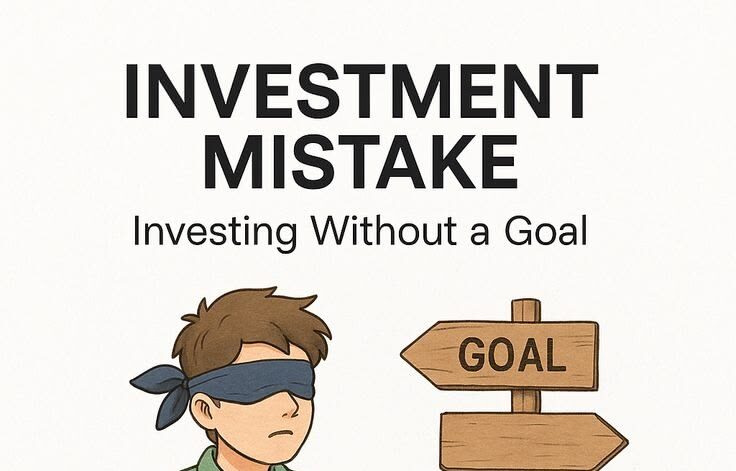
Investing With Borrowed Money
Borrowing money to invest can significantly increase financial pressure and risk.
Chasing Quick Profits
Investing isn’t a guaranteed shortcut to becoming wealthy.
Checking Your Portfolio Every Hour
Constantly watching prices can create unnecessary anxiety.
Copying Someone Else
Your financial situation may be completely different from theirs.
Ignoring Fees and Taxes
Investment costs and taxes can affect your actual returns.
Putting All Your Money in One Place
Concentration can make your portfolio more vulnerable to one poor investment.
A Simple Beginner Example
Let’s imagine that Aman earns $600 per month.
After paying his regular expenses, he decides that $50 can comfortably go toward his long-term financial goals.
Instead of immediately buying random stocks, he first builds an emergency fund, pays attention to expensive debt, learns about different investments, and understands his risk tolerance.
Once he’s comfortable, he creates a simple investment plan and invests regularly.
He doesn’t expect to become rich in six months.
His goal is to build a habit that can continue for many years.
That’s the kind of approach I believe beginners should focus on.
What I Learned From Starting Small

One thing I wish I had understood earlier is that you don’t need to know everything before you start learning about investing.
At the beginning, I was worried about making the perfect decision.
Eventually, I realized that learning is itself part of the process.
You can start by understanding basic concepts, make a simple plan, and gradually improve your knowledge.
The important thing is not to confuse investing with chasing quick money.
Final Thoughts
Starting your investment journey in 2026 doesn’t have to be complicated.
You don’t need a huge amount of money or advanced financial knowledge. What you need is a clear goal, a realistic budget, an understanding of risk, and the patience to think long term.
Before investing, get your basic finances in order, build an emergency fund, understand your investment options, and decide how much money you can comfortably invest.
Then start small, diversify where appropriate, keep learning, and avoid making decisions based on market hype or emotions.
Most importantly, remember that investing is a journey, not a race.
You don’t have to become an expert overnight.
Start with what you understand, invest according to your situation, and give yourself time to learn and grow.