
Hi, I’m Kushal from India.
When I first started learning about investing, I came across many terms like Mutual Funds, Stocks, SIP, Index Funds, and then one day I heard about ETFs. Honestly, I ignored the term for a while because it sounded too technical. I assumed ETFs were only for experienced investors.

Later, while reading about different investment options, I realized ETFs are actually much simpler than they sound. In fact, many beginners can understand them easily once someone explains them in plain language.
The biggest surprise for me was that an ETF combines some features of both stocks and mutual funds. That makes it an interesting option for investors who want diversification with the flexibility of stock trading.
If you’re hearing about ETFs for the first time, don’t worry. In this guide, I’ll explain everything step by step in simple English so anyone can understand.
What Is an ETF?
ETF stands for Exchange Traded Fund.

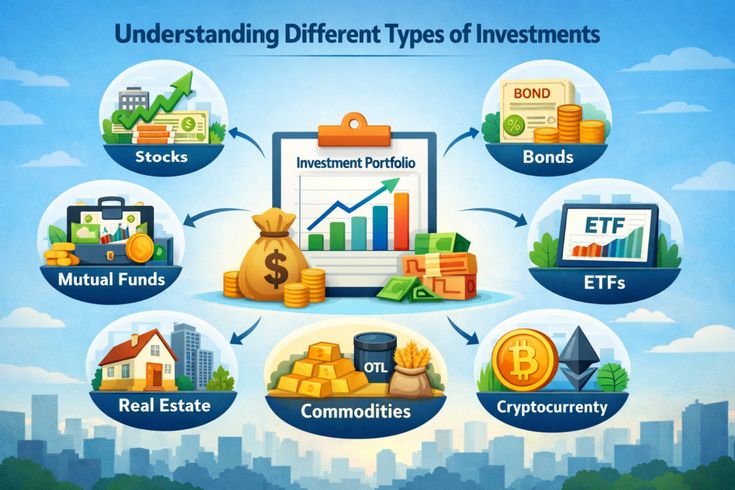
An ETF is a type of investment fund that holds a collection of assets such as:
- Stocks
- Bonds
- Gold
- Other securities
Instead of buying each asset separately, you buy one ETF, and that single investment gives you exposure to many assets.
The unique thing about ETFs is that they are bought and sold on the stock exchange, just like company shares.
In simple words:
An ETF is like a basket of investments that you can buy and sell on the stock market.
A Simple Real-Life Example
Imagine you go to a fruit market.
Instead of buying one apple, one banana, one orange, and one mango separately, you buy a ready-made fruit basket that already contains all of them.
Now, with one purchase, you own a variety of fruits.
An ETF works in a similar way.
Instead of buying shares of many different companies one by one, you buy one ETF that already contains a collection of investments.
This example helped me understand ETFs much faster than complicated financial definitions.
Why Were ETFs Created?
When I first learned about investing, I realized buying many different stocks individually could require:
- More money
- More research
- More time
ETFs were created to make investing more convenient by allowing investors to own a diversified portfolio through a single investment.
This makes investing simpler for many people.
How Does an ETF Work?
Let’s understand the process step by step.
Step 1: The ETF Creates a Portfolio
The ETF invests in a group of assets.
For example, it may include shares of many different companies.
Step 2: Investors Buy ETF Units
Instead of buying every company individually, investors buy units of the ETF.
Step 3: ETF Value Changes
As the value of the underlying investments changes, the ETF’s price also changes.
Step 4: Investors Can Buy or Sell
Since ETFs trade on stock exchanges, investors can generally buy or sell them during market hours.
ETF vs Buying Individual Stocks
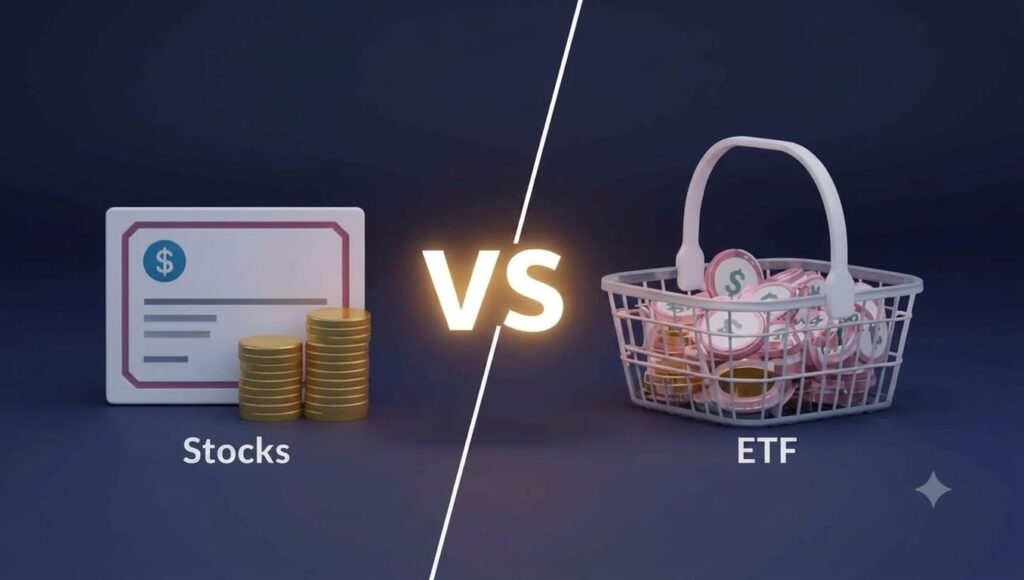
This was one of the biggest questions I had.
Suppose you buy shares of only one company.
If that company performs poorly, your investment may be affected significantly.
Now imagine an ETF that contains shares of 50 companies.
Even if one company performs poorly, the overall impact may be smaller because your investment is spread across many companies.
This concept is called diversification, and it’s one reason ETFs are popular.
What I Learned About ETFs
When I first understood ETFs, I realized they are not about finding the “best” company.
Instead, they focus on owning a collection of companies or assets together.
That felt less stressful than trying to predict which single stock might perform well in the future.
Types of ETFs
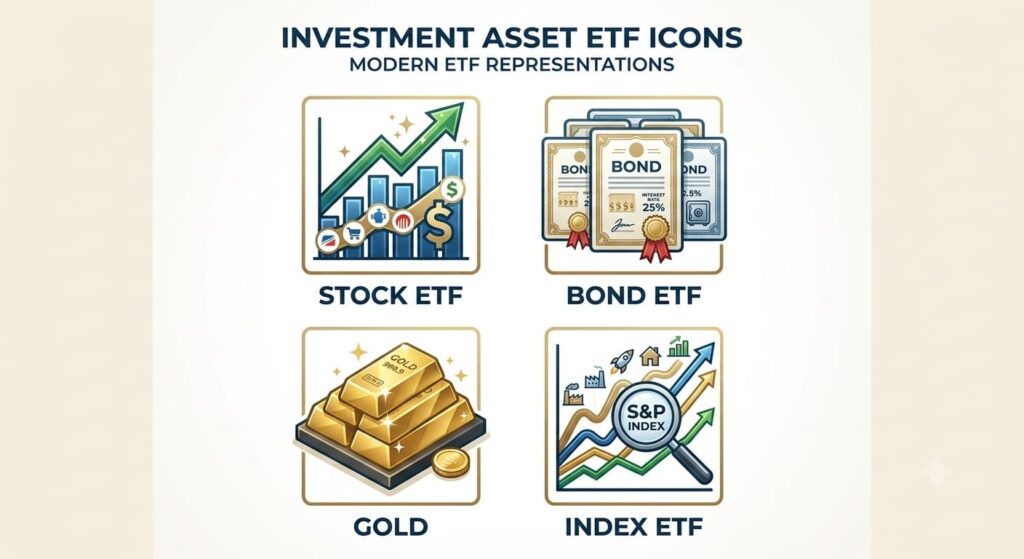
There are different types of ETFs.
Here are some common ones.
- Stock ETFs
These invest in shares of companies.
They are among the most popular ETFs. - Bond ETFs
These invest mainly in bonds and fixed-income securities.
Some investors choose them for diversification. - Gold ETFs
Instead of buying physical gold, investors can gain exposure to gold prices through Gold ETFs. - Index ETFs
These aim to track the performance of a market index.
Many long-term investors prefer index-based ETFs because of their simplicity.
Advantages of ETFs
- Diversification
Buying one ETF can provide exposure to many investments.
This helps reduce dependence on a single company. - Easy to Buy and Sell
Unlike some investment products, ETFs trade on stock exchanges during market hours.
This offers flexibility. - Beginner Friendly
Many ETFs are relatively easy to understand once you know the basics.
They allow beginners to start with diversified investments instead of selecting individual stocks. - Transparency
Most ETFs regularly disclose the investments they hold.
This allows investors to know what they are investing in. - Long-Term Investing
Many investors use ETFs for long-term wealth-building rather than short-term trading.
Are ETFs Risk-Free?
No.
This is one of the most important things beginners should understand.
Although ETFs provide diversification, they still involve market risk.
If the overall market declines, the value of many ETFs may also fall.
No investment is completely risk-free.
ETF vs Mutual Fund
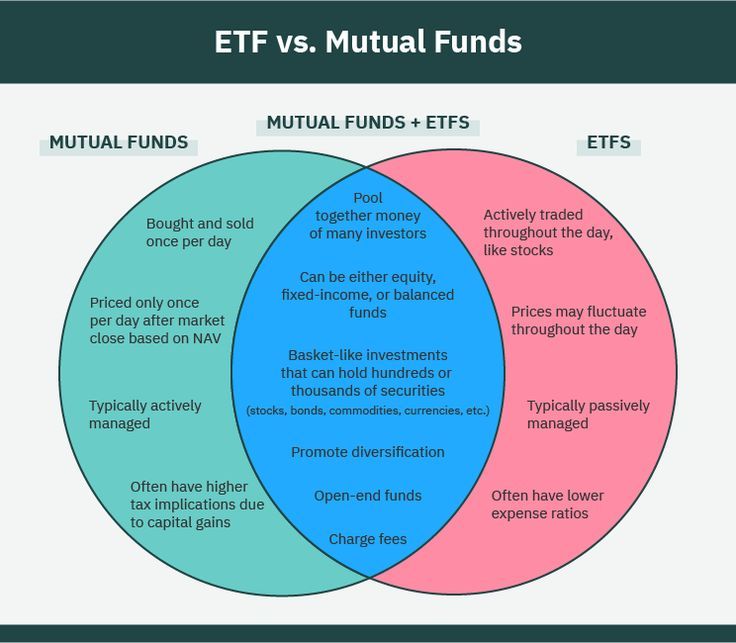
When I first heard about ETFs, I thought they were exactly the same as mutual funds.
After learning more, I found some important differences.
ETFs
- Bought and sold on stock exchanges.
- Prices change during the trading day.
- Can be traded like shares.
Mutual Funds
- Usually bought directly through fund houses or investment platforms.
- The price is generally calculated after the market closes for the day.
Both have their own advantages, and neither is automatically better than the other.
The right choice depends on your financial goals and investing style.
A Real-Life Example
Imagine two friends.
Neha
Neha spends weeks researching individual companies before buying shares.
Arjun
Arjun wants a simpler approach.
Instead of choosing individual companies, he buys an ETF that already includes many companies.
Both are investing, but they are using different strategies.
This example helped me understand why ETFs appeal to many beginners.
Who Should Consider ETFs?
ETFs may be suitable for people who:
- Want diversified investments.
- Prefer a simple investing approach.
- Plan to invest for the long term.
- Don’t want to research individual companies extensively.
Remember, every investment decision should match your own financial goals and risk tolerance.
Common Mistakes Beginners Make
In my opinion, these are some common ETF mistakes.
Thinking ETFs Cannot Lose Money
ETFs can rise and fall because markets fluctuate.
Investing Without Understanding the ETF
Always learn what an ETF actually invests in before buying it.
Expecting Quick Profits
ETFs are often used for long-term investing rather than short-term gains.
Following Trends Blindly
Just because an ETF is popular doesn’t mean it is suitable for everyone.
Understand the investment before making decisions.
How Are ETFs Different From Index Funds?
This question confused me at first.
Many Index Funds and Index ETFs aim to track the same market index.
The main difference is how they are bought and sold.
An Index ETF trades on the stock exchange throughout the day, while a traditional Index Mutual Fund is generally purchased at the day’s closing price (NAV).
Both can be useful, depending on how you prefer to invest.
My Personal View on ETFs

The biggest lesson ETFs taught me is that investing doesn’t always have to be complicated.
You don’t have to become an expert in every company before starting your investment journey.
Sometimes, choosing a diversified investment and staying patient can be a practical approach.
For beginners, learning first and investing second is always a better strategy than rushing into the market.
Final Thoughts
ETFs have become a popular investment option because they combine diversification with the convenience of stock market trading.
While they are not risk-free, they offer beginners an easier way to gain exposure to a wide range of investments without buying each asset individually.
For beginners in 2026, the most important step isn’t finding the perfect ETF.
It’s understanding how ETFs work, knowing the risks involved, and making investment decisions that align with your long-term financial goals.
Remember, successful investing isn’t about getting rich overnight. It’s about making informed decisions and staying consistent over time.