
Hi, I’m Kushal from India.
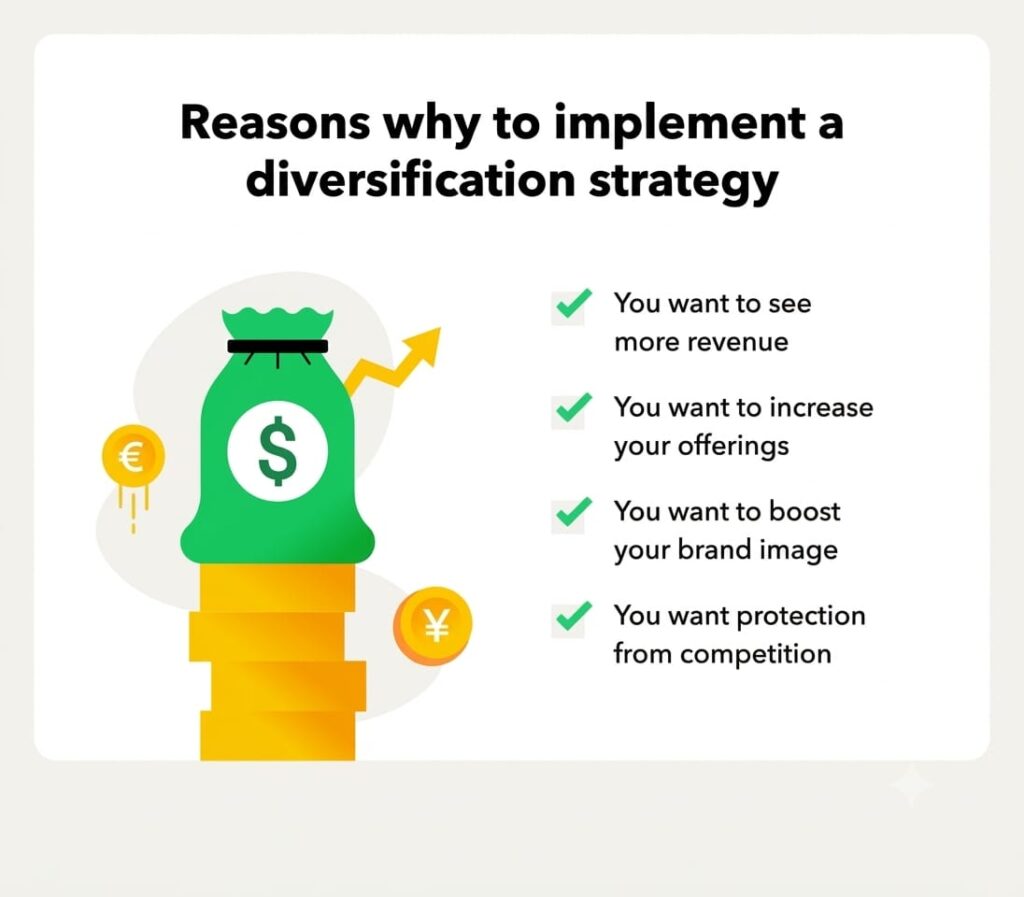
When I first started learning about investing, I made the same mistake that many beginners make. I thought the smartest strategy was to find one “perfect” investment and put all my money into it. If that investment performed well, I believed I would earn the highest possible returns.
But the more I learned about personal finance, the more I realized that experienced investors rarely depend on just one investment. Instead, they spread their money across different assets to reduce risk. This strategy is known as diversification.
At first, the word sounded complicated, but the concept behind it is actually very simple. In fact, it’s one of the easiest and most important lessons every beginner should understand before investing.
In this guide, I’ll explain what diversification is, why it matters, how it works, and how beginners can use it to build a stronger investment portfolio.
What Is Diversification?
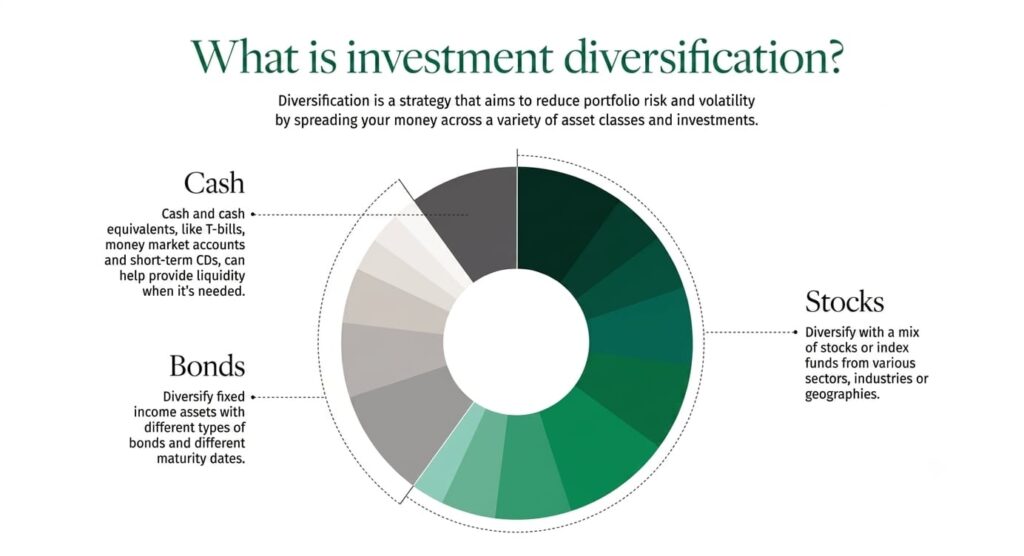
Diversification is an investment strategy where you spread your money across different types of investments instead of putting everything into one place.
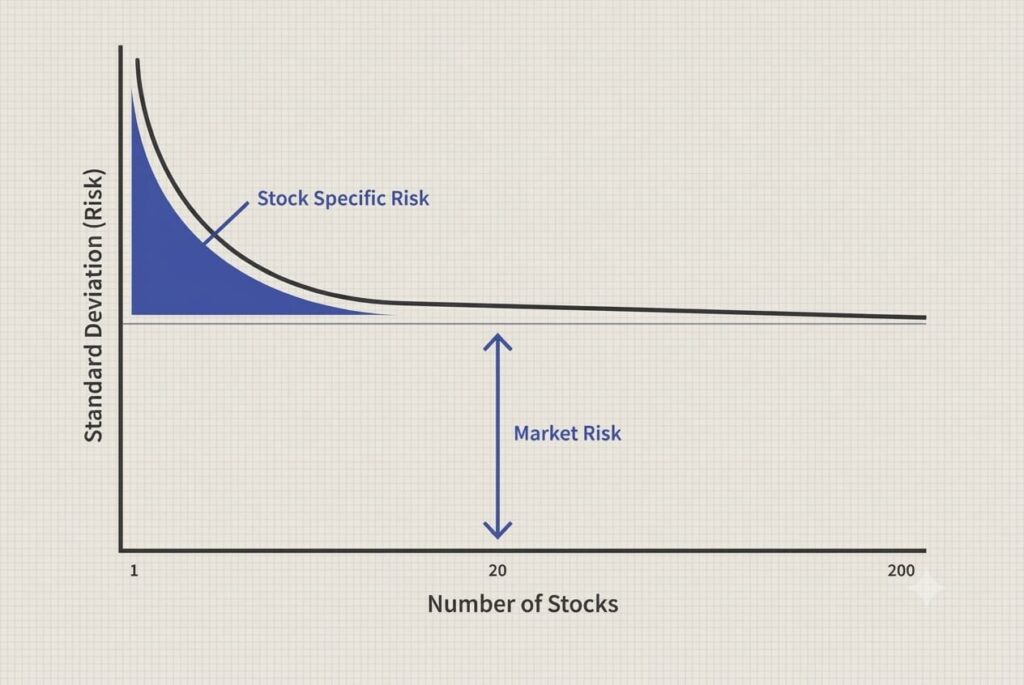
The goal of diversification is not to maximize returns overnight, but to reduce the overall risk of your portfolio.
In simple words:
Diversification means not putting all your money into a single investment.
A Simple Real-Life Example
Imagine you have a basket with 10 eggs.
If you keep all 10 eggs in one basket and accidentally drop it, you could lose every egg.
Now imagine you divide those 10 eggs into three different baskets.
If one basket falls, the others remain safe.
Investing works in a similar way.
Putting all your money into one company or one investment increases risk. Spreading it across different investments helps protect your portfolio if one investment performs poorly.
This simple example helped me understand diversification better than any financial definition.
Why Is Diversification Important?
When I first started learning about investing, I focused only on returns. Later, I realized that protecting your money is just as important as growing it.
No one can predict the future with complete certainty.
Even strong companies can face unexpected challenges.
Markets can rise and fall.
Economic conditions can change.
Diversification helps reduce the impact of these uncertainties.
How Does Diversification Work?
Let’s understand it step by step.
Example 1: No Diversification
Rahul invests his entire ₹1,00,000 in one company’s stock.
If that company performs poorly, Rahul’s entire investment may suffer.
Example 2: Diversified Portfolio
Aman invests $1000 like this:
- $300 in Mutual Funds
- $250 in Stocks
- $200 in Fixed Deposits
- $150 in Gold
- $100 in Cash or Savings
If one investment performs poorly, the others may help balance the overall portfolio.
That’s the basic idea of diversification.
My Experience Learning About Diversification
When I first heard experienced investors talk about diversification, I thought they were trying to reduce profits.
Later, I understood they were actually trying to reduce unnecessary risk.
That completely changed my mindset.
Instead of asking,
“Which investment will make me rich quickly?”
I started asking,
“How can I protect my money while allowing it to grow?”
That simple shift made investing feel much more practical.
Different Ways to Diversify Your Investments
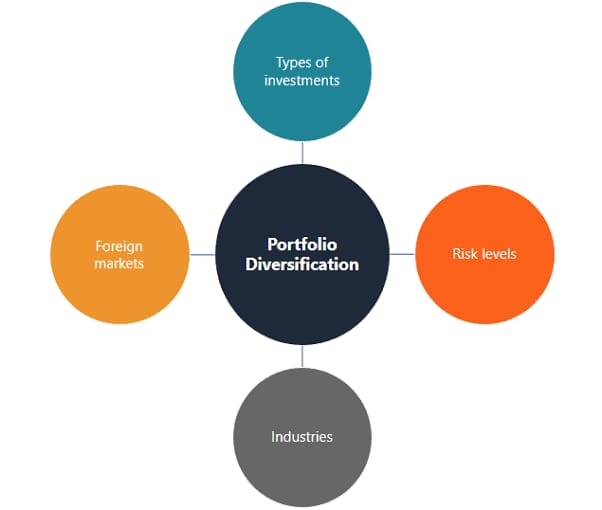
Diversification isn’t just about buying many investments.
It’s about spreading your money wisely.
1. Diversify Across Asset Classes
Invest in different types of assets.
Examples include:
- Stocks
- Mutual Funds
- ETFs
- Fixed Deposits
- Gold
- Bonds
- Savings Account
Each asset behaves differently under different market conditions.
2. Diversify Across Industries
If you invest only in technology companies, your portfolio depends heavily on one sector.
Instead, you can spread investments across industries like:
- Banking
- Healthcare
- Technology
- Automobile
- Consumer Goods
- Energy
This reduces dependence on a single industry.
3. Diversify Across Company Sizes
Many investors spread investments among:
- Large-cap companies
- Mid-cap companies
- Small-cap companies
Each category has different growth opportunities and risks.
4. Diversify Across Time
One lesson that surprised me was that diversification also applies to when you invest.
Instead of investing all your money on one day, many investors use SIPs to invest regularly over time.
This reduces the pressure of trying to find the “perfect” time to invest.
What Diversification Cannot Do
Many beginners misunderstand diversification.
Diversification does not guarantee profits.
It also does not completely eliminate investment risk.
Markets can still decline.
However, diversification can reduce the impact of one poor investment on your overall portfolio.
Benefits of Diversification
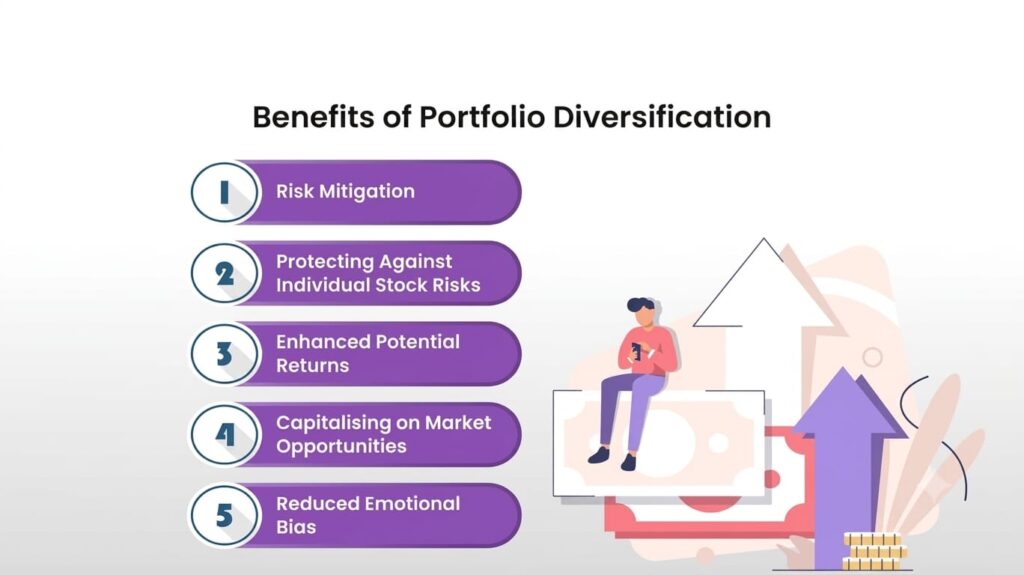
- Reduces Overall Risk
This is the biggest advantage.
If one investment performs poorly, others may perform better. - Creates a More Balanced Portfolio
Different investments often respond differently to market conditions.
This helps create stability over the long term. - Reduces Emotional Investing
When all your money is in one investment, price changes can create stress.
Diversification often helps investors remain calmer during market fluctuations. - Supports Long-Term Investing
Many long-term investors use diversification because it provides better balance over time.
Common Diversification Mistakes
In my opinion, these are some common beginner mistakes.
Buying Too Many Similar Investments
Owning five technology stocks isn’t true diversification.
If the technology sector struggles, all five may decline together.
Ignoring Risk
Diversification helps reduce risk but doesn’t remove it completely.
Every investment still carries some level of uncertainty.
Following Popular Trends
Buying investments only because they are trending can increase risk.
Always understand what you’re investing in.
Never Reviewing Your Portfolio
Investments should be reviewed periodically to ensure they still match your financial goals.
A Real-Life Example
Imagine two cousins.
Rohan
Rohan invests all his savings in one company’s shares because he believes it will become the next big success.
Unfortunately, the company performs poorly.
His portfolio loses significant value.
Neeraj
Neeraj spreads his investments among stocks, mutual funds, fixed deposits, and gold.
One investment underperforms, but the others help reduce the overall impact.
This example taught me why diversification is often considered one of the most important principles in investing.
Does Diversification Mean Lower Returns?
Not necessarily.
Many beginners think diversification automatically reduces profits.
Actually, its primary purpose is to balance risk and return.
Sometimes one investment will outperform.
Other times another investment will.
Diversification focuses on building a stronger overall portfolio rather than depending on a single winner.
Diversification and Long-Term Goals
If you’re investing for goals like:
- Buying a house
- Retirement
- Children’s education
- Financial independence
Diversification can play an important role because these goals often require long-term planning.
How Beginners Can Start Diversifying
If you’re just starting, consider these simple ideas:
- Learn before investing.
- Avoid putting all your money into one investment.
- Understand your financial goals.
- Invest according to your risk tolerance.
- Review your portfolio from time to time.
Remember, diversification doesn’t have to be complicated.
Even small steps can make a difference.
My Personal View on Diversification
The biggest lesson diversification taught me is that investing isn’t about predicting the future perfectly.
It’s about preparing for uncertainty.
No one knows which investment will perform best every year.
Instead of trying to guess the future, I believe it’s wiser to build a balanced portfolio that can handle different market situations.
That approach gives me much more confidence than chasing the latest investment trend.
Final Thoughts
Diversification is one of the simplest yet most powerful principles in investing. By spreading your money across different investments, industries, and asset classes, you reduce the risk of depending on a single investment for your success.
While diversification cannot guarantee profits or prevent all losses, it can help create a more balanced and resilient portfolio over the long term.
For beginners in 2026, the goal shouldn’t be finding one “perfect” investment.
The goal should be building a portfolio that matches your financial goals, risk tolerance, and long-term plans.
Because successful investing isn’t about putting all your hopes into one opportunity.
It’s about making thoughtful decisions, staying patient, and allowing time and diversification to work together.

Conclusion
Diversification is one of the smartest investing strategies because it helps reduce risk by spreading your money across different types of investments instead of relying on just one. While it cannot guarantee profits or completely eliminate losses, it can make your investment journey more balanced and less stressful, especially during market ups and downs.
In my opinion, one of the biggest mistakes beginners make is investing all their money in a single stock, sector, or asset because they expect quick returns. A better approach is to build a diversified portfolio that matches your financial goals, risk tolerance, and investment timeline.
Remember, successful investing is not about finding one “perfect” investment. It’s about creating a well-balanced portfolio, staying patient, and remaining consistent over the long term. The more diversified your investments are, the better prepared you’ll be to handle market uncertainty while working toward your financial goals.